
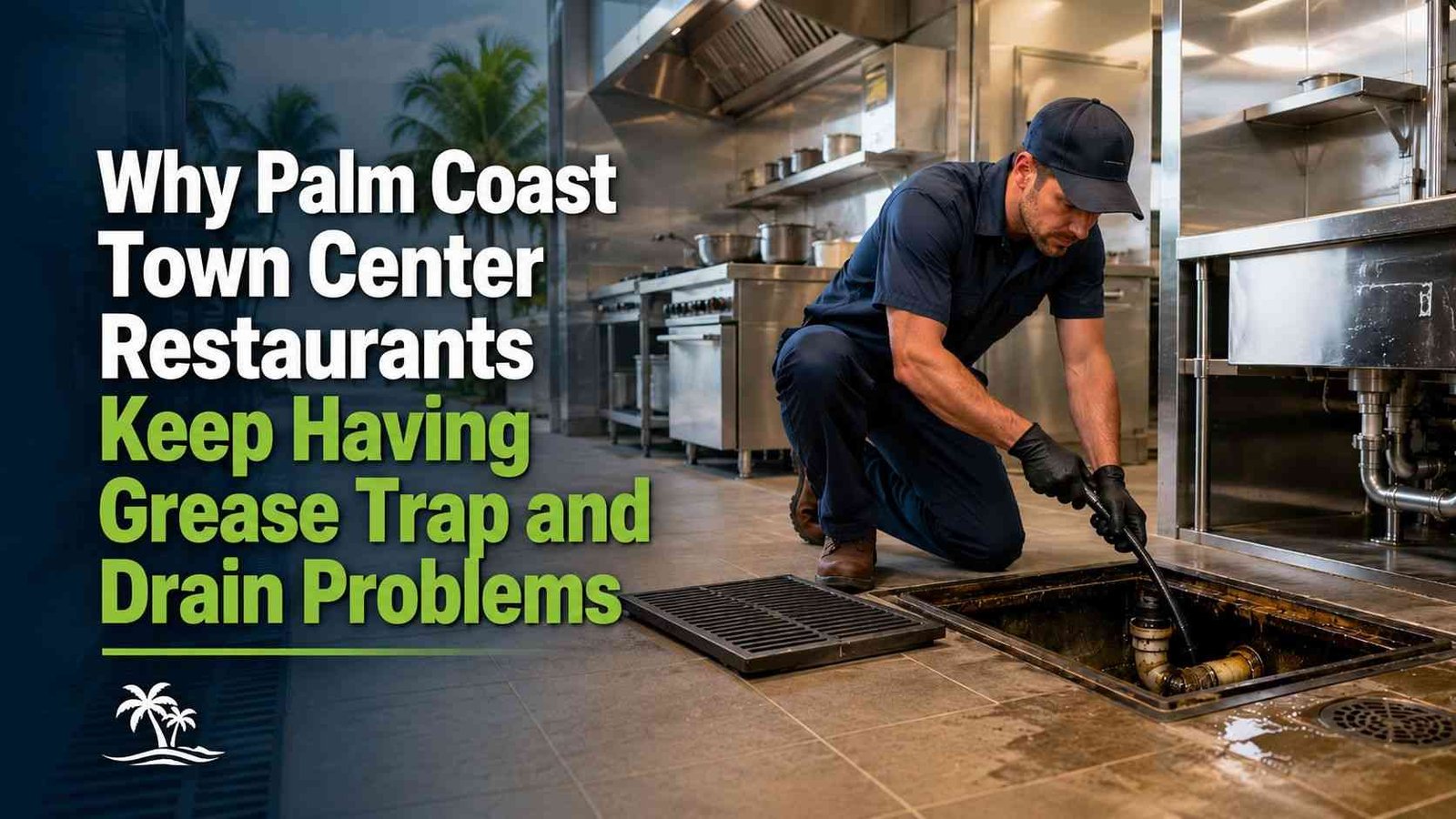
Running a restaurant near Palm Coast Town Center means keeping dozens of moving parts working at once. Your kitchen equipment, staff, refrigeration, food deliveries, customer service, and plumbing all have to perform under pressure.
Unfortunately, restaurant plumbing systems receive far more abuse than the plumbing in an average home.
Cooking grease, food scraps, soap residue, and heavy water usage can gradually restrict kitchen drains and overwhelm grease-control equipment. What begins as a slow sink can quickly turn into foul odors, standing water, a backed-up floor drain, or a kitchen that cannot operate.
For restaurants around Town Center, State Road 100, Belle Terre Parkway, and nearby commercial developments, recurring drain problems are rarely random. They are usually signs that grease and debris are accumulating somewhere in the plumbing system.
Understanding why these problems happen can help restaurant owners address them before they interrupt service.
Why Restaurant Drains Clog More Frequently Than Residential Drains
A residential kitchen may prepare a few meals each day. A commercial kitchen can prepare hundreds.
That volume places a much heavier load on sinks, floor drains, dishwashing stations, grease traps, and underground drain lines. Even when employees follow proper disposal procedures, small amounts of grease and food waste can enter the plumbing system during every shift.
Over time, that buildup becomes significant.
Common materials entering restaurant drains include:
- Cooking oils and animal fats
- Butter, sauces, dressings, and dairy products
- Small pieces of meat, rice, pasta, and vegetables
- Flour, batter, and coffee grounds
- Detergents and cleaning chemicals
- Paper products and disposable wipes
Hot grease may flow down a drain as a liquid, but it does not stay that way. As it cools inside the plumbing system, it begins coating the walls of the pipe.
Each new layer makes the opening slightly smaller. Food particles and other debris then stick to the grease, creating a thick obstruction that ordinary drain cleaners cannot reliably remove.
The Role of Grease Traps and Grease Interceptors
Grease traps and grease interceptors are designed to separate fats, oils, grease, and solids from wastewater before those materials enter the sewer system.
As wastewater moves through the unit, grease floats toward the top while heavier solids settle at the bottom. The remaining wastewater exits through the outlet.
This process only works when the equipment is:
- Properly sized for the restaurant
- Correctly installed
- Accessible for inspection and cleaning
- Pumped and maintained regularly
- Free from damaged baffles or internal components
Palm Coast’s utility regulations define grease interceptors as devices designed to separate fats, oils, grease, and heavy solids from commercial wastewater. Food-service facilities that are newly constructed, expanded, or renovated may be required to install city-approved grease-control equipment.
A grease trap is not a garbage disposal with a lid. It has a limited capacity.
Once too much grease or solid waste accumulates inside the unit, wastewater has less room to flow. Grease can then escape through the outlet and begin coating the downstream drain or sewer line.
Why Town Center Restaurants May Experience Recurring Problems
Palm Coast Town Center is a mixed-use district centered near State Road 100. It includes restaurants, offices, residential developments, entertainment destinations, medical facilities, and other commercial properties.
Restaurants in busy commercial areas often deal with several conditions that increase the risk of plumbing problems.
High Customer Volume
More customers mean more food preparation, more dirty dishes, more restroom use, and more wastewater moving through the building.
During lunch rushes, dinner service, weekends, and community events, the plumbing system may experience hours of nearly continuous use.
A drain line that performs adequately during slower periods may begin backing up when several sinks and appliances discharge water at the same time.
Shared Commercial Drain Lines
Some restaurants operate in shopping centers or multi-tenant buildings. Depending on the property’s plumbing layout, several businesses may connect to a shared private sewer line before wastewater reaches the municipal system.
A restriction farther down that shared line can affect more than one tenant.
The restaurant experiencing the backup may not be the only business contributing to the problem. This is why accurately locating the obstruction matters before repairs begin.
Inconsistent Grease Trap Maintenance
Busy restaurant managers have plenty to manage. Grease trap service can easily become something that gets postponed until a problem develops.
The trap may also be pumped according to a generic schedule rather than its actual usage. A high-volume restaurant may fill its grease interceptor much faster than a smaller café.
Waiting until the trap is completely full is like waiting until your vehicle’s engine seizes before changing the oil. The maintenance may still happen, but the damage has already started.
Improper Kitchen Practices
Even a properly sized grease interceptor can struggle when large amounts of grease and food waste are intentionally washed into the drains.
Common mistakes include:
- Pouring fryer oil into sinks
- Spraying food scraps from plates without scraping them first
- Cleaning greasy pans before wiping away excess residue
- Removing sink strainers during busy periods
- Flushing mop water containing food debris
- Using hot water to push grease farther into the system
Hot water may temporarily move grease through the kitchen drain, but it does not eliminate it. The grease often cools and hardens farther down the line, where the blockage becomes more difficult to reach.
An Undersized or Damaged Grease Interceptor
A restaurant’s menu, equipment, seating capacity, and operating volume can change over time.
A grease trap that worked for a small café may not be adequate after the space becomes a full-service restaurant. Internal baffles may also deteriorate, lids may fail to seal, or outlet components may become damaged.
When the interceptor is too small or no longer functioning correctly, pumping it more frequently may reduce symptoms without solving the underlying problem.
Warning Signs Restaurant Owners Should Not Ignore
Commercial drain problems usually provide warning signs before a complete backup occurs.
Call a Palm Coast commercial plumber when you notice:
Drains That Keep Slowing Down
One slow sink may indicate a localized obstruction. Several slow fixtures often point to a larger restriction in a branch line or main drain.
Gurgling Sounds
Gurgling can occur when trapped air struggles to move around wastewater and debris inside a restricted pipe.
Foul Odors
Persistent sewage or rancid grease odors may indicate accumulated organic material, a dry drain trap, a venting problem, or grease escaping from the interceptor.
Water Backing Up Through Floor Drains
A floor drain is often one of the lowest openings in a commercial kitchen. When a downstream line becomes blocked, wastewater may emerge through that drain first.
Frequently Full Grease Traps
A trap that seems to fill unusually quickly may be undersized, receiving too many solids, or experiencing a problem with its internal flow.
Multiple Fixtures Backing Up Together
When a sink, floor drain, and dishwasher area begin backing up at the same time, the obstruction is probably not limited to one fixture.
These symptoms should not be ignored simply because the water eventually drains. A partial blockage can temporarily release and then return during the next busy service.
Why Chemical Drain Cleaners Are a Bad Commercial Strategy
Pouring chemical drain cleaner into a commercial kitchen sink may seem faster than calling a plumber, but it rarely addresses heavy grease buildup.
Chemical cleaners may:
- Damage certain pipes and seals
- Create hazardous conditions for employees
- Produce dangerous fumes
- React with other cleaning products
- Leave corrosive liquid trapped behind the blockage
- Temporarily open a small channel without cleaning the pipe
They can also create additional risks for the plumber who later opens or removes the affected line.
Restaurant drains need a solution based on the type, location, and severity of the obstruction. Guessing with chemicals can turn a manageable service call into a more dangerous repair.
How Commercial Drain Cleaning Solves the Problem
Professional commercial drain cleaning in Palm Coast should do more than push a small hole through the blockage.
The plumber may begin by checking the affected fixtures, grease interceptor, cleanouts, and drainage pattern. If the blockage keeps returning, a sewer camera inspection may help identify heavy buildup, damaged piping, improper slope, or another structural issue.
Depending on the condition of the line, recommended services may include:
Mechanical Drain Cleaning
A commercial drain machine can break apart certain obstructions and restore flow through the pipe.
Hydro Jetting
Hydro jetting uses high-pressure water to remove grease, sludge, food residue, and other buildup from the inside walls of a drain or sewer line.
This can be especially useful for restaurant lines affected by recurring grease accumulation. Instead of simply punching through the center of the obstruction, hydro jetting can provide a more thorough cleaning.
Sewer Camera Inspection
A camera inspection helps determine whether the recurring problem is caused by grease alone or by a damaged, sagging, misaligned, or obstructed pipe.
Without an inspection, a restaurant may repeatedly pay to clear the same symptom while the underlying defect remains.
Grease Trap or Interceptor Evaluation
The plumber can inspect visible components and help determine whether the grease-control equipment appears damaged, improperly connected, or inadequate for the current kitchen operation.
How Palm Coast Restaurants Can Prevent Drain Backups
Preventive maintenance is far less disruptive than an emergency shutdown during dinner service.
Restaurant owners and managers can reduce recurring problems by implementing a few consistent practices.
Scrape Before Washing
Remove food scraps and heavy residue from plates, pans, and cooking equipment before they reach the sink.
Use Sink Strainers
Keep properly sized strainers in prep sinks, washing stations, and other appropriate drains. Empty them into the trash regularly.
Store Cooking Oil Properly
Used fryer oil should be placed in designated containers for collection or recycling, never poured into sinks, toilets, or floor drains.
Wipe Greasy Equipment First
Dry-wipe greasy pans, trays, and utensils before washing them. This small step can keep a surprising amount of grease out of the plumbing system.
Maintain the Grease Interceptor
Have the interceptor inspected and serviced according to actual kitchen usage, equipment size, local requirements, and professional recommendations.
Keep maintenance records so managers can identify patterns and avoid missed service intervals.
Schedule Preventive Drain Cleaning
A planned commercial drain maintenance program allows grease buildup to be addressed before the line closes completely.
The appropriate frequency depends on:
- Restaurant volume
- Menu and cooking methods
- Pipe size and layout
- Grease interceptor performance
- History of previous backups
A restaurant that fries large amounts of food may need a different schedule than a coffee shop or sandwich café.
Train Every Employee
A maintenance plan falls apart when only the manager understands it.
Kitchen employees, dishwashers, cleaning crews, and supervisors should all know what cannot go down the drain and what warning signs must be reported.
What to Do During a Restaurant Drain Backup
When wastewater begins backing up into a commercial kitchen, acting quickly can limit damage and reduce contamination risks.
Take the following steps:
- Stop using affected sinks, dishwashers, and fixtures.
- Keep employees and customers away from contaminated areas.
- Do not continue running water to test whether the blockage has cleared.
- Do not pour chemicals into the affected drains.
- Contact an emergency plumber serving Palm Coast.
- Document affected areas for the property manager or insurance provider when appropriate.
- Follow applicable food-safety and sanitation procedures before reopening the area.
Continuing to use the plumbing can force more wastewater onto the floor or into nearby rooms.
Protect Your Palm Coast Restaurant Before the Next Backup
A restaurant drain rarely becomes completely blocked overnight. Grease and debris build layer by layer until the remaining opening can no longer handle the kitchen’s wastewater.
The good news is that recurring backups can often be prevented with proper grease-management practices, professional drain cleaning, and a maintenance schedule built around the restaurant’s actual workload.
Flagler County Plumber provides commercial plumbing services in Palm Coast for restaurants, cafés, retail centers, offices, and other local businesses. Whether you are dealing with a slow kitchen drain, overflowing floor drain, recurring grease blockage, or commercial sewer problem, our team can inspect the system and recommend the right solution.
Do not wait for a clogged drain to close your kitchen during the busiest part of the day.
Call Flagler County Plumber today to schedule commercial drain service for your Palm Coast business.

