
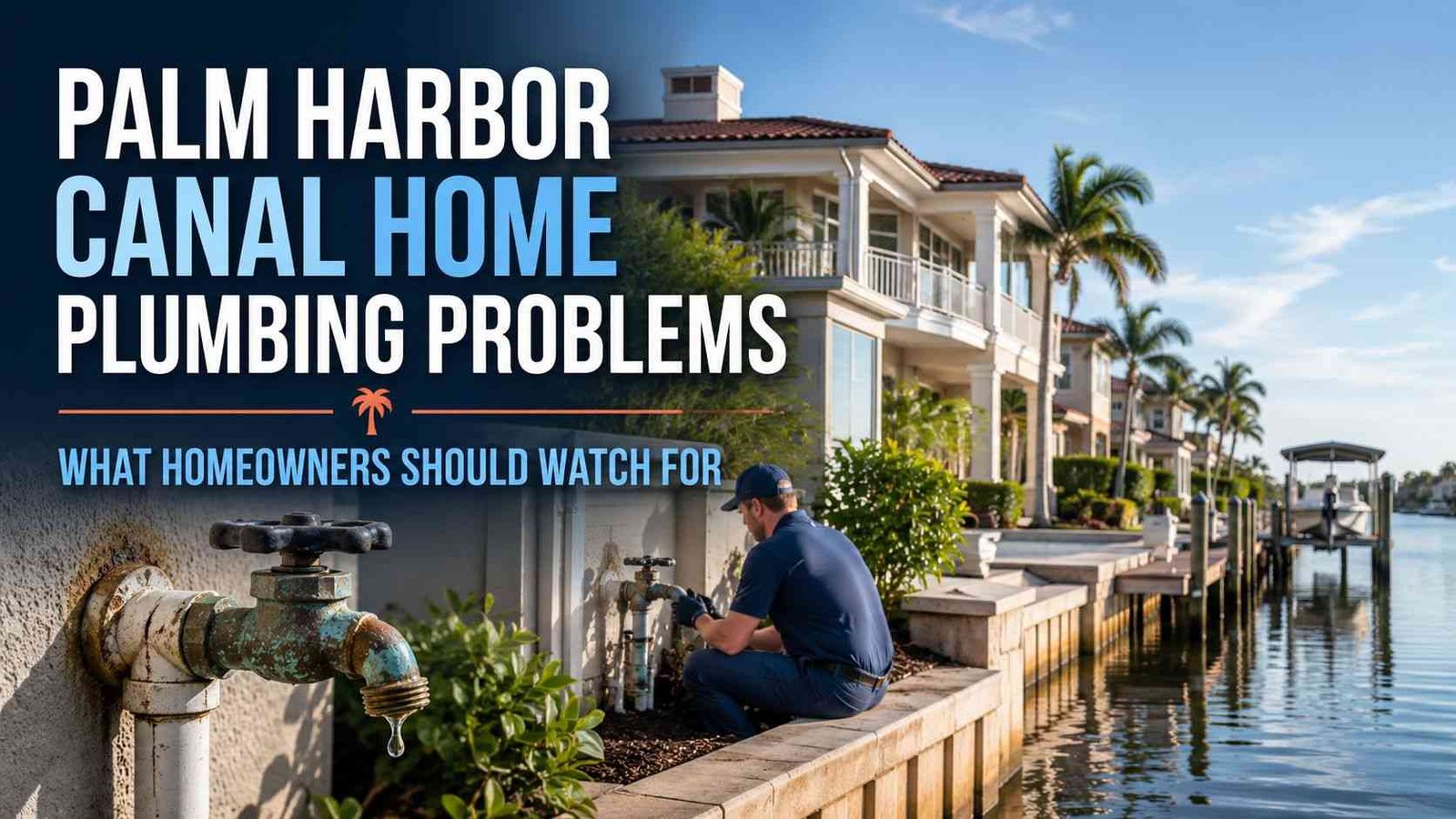
Living along one of Palm Harbor’s saltwater canals offers beautiful views, boating access, and a lifestyle that makes this part of Palm Coast especially desirable.
However, coastal living also places added pressure on plumbing fixtures, exposed connections, water heaters, outdoor pipes, and other metal components around the home. Small signs of corrosion or leaking should not be ignored because moisture-related damage can spread long before it becomes obvious.
Palm Harbor homeowners who understand the warning signs can often address plumbing problems before they lead to water damage, mold growth, or an expensive emergency repair.
Why Palm Harbor Homes Require Extra Plumbing Attention
Palm Harbor includes many of Palm Coast’s original residential areas, along with miles of saltwater canals that connect homeowners to the Intracoastal Waterway. Palm Coast’s canal system was initially installed during the 1960s and 1970s, and Palm Harbor remains one of the city’s most established waterfront communities.
Not every home in Palm Harbor is the same age, and living near a canal does not automatically mean that a home will develop plumbing problems.
However, older properties, previous plumbing repairs, persistent humidity, airborne salt, and exposed outdoor components can create conditions that deserve closer attention.
The most vulnerable areas are often not the pipes hidden safely inside the home. Problems commonly begin around hose bibs, exterior shutoff valves, water heater connections, outdoor kitchens, pool plumbing, irrigation equipment, and metal fittings exposed to coastal air.
How Coastal Conditions Can Affect Plumbing Components
Salt and moisture are not a friendly combination for metal.
Airborne salt can settle on exposed plumbing components and hold moisture against the surface. Over time, this may accelerate corrosion on fixtures, screws, brackets, supply connections, valves, and other metal parts.
This does not mean that saltwater from the canal is flowing through the home’s plumbing system. The concern is environmental exposure around the property, especially on components located outdoors or inside damp garages and utility areas.
Corrosion often starts as a cosmetic issue, but it can eventually weaken a fitting or connection enough to cause a leak.
1. Corroded Outdoor Hose Bibs and Shutoff Valves
Exterior hose bibs are easy to overlook until they stop working properly.
Look for green, white, orange, or blue-green buildup around the fixture. These deposits may indicate oxidation, mineral accumulation, or a slow leak that keeps the surrounding area damp.
Other warning signs include:
- A handle that is difficult to turn
- Water leaking around the valve stem
- Dripping after the faucet has been closed
- Rusted mounting hardware
- Cracks around the pipe penetration
- Low pressure from the outdoor faucet
A dripping hose bib may appear minor, but the escaping water can damage stucco, enter the wall, attract insects, and create a persistently wet area near the foundation.
Do not force a heavily corroded valve open or closed. The weakened fitting could break inside the wall and turn a small repair into an emergency.
2. Water Heater Corrosion and Leaking Connections
Many Palm Coast water heaters are installed in garages, where they are exposed to heat, humidity, and fluctuating conditions throughout the year.
Palm Harbor homes near the canals may also have more salt and moisture circulating through garages when doors remain open. This can contribute to surface corrosion around the water heater and its connections.
Inspect the area for:
- Rust around the top or bottom of the tank
- Moisture beneath the unit
- Corroded supply connections
- Water around the drain valve
- Mineral buildup near fittings
- A leaking temperature and pressure relief valve
- Rust-colored hot water
- Popping or rumbling sounds
A small amount of rust on an exterior component does not always mean the tank must be replaced. However, corrosion on the tank body, active leaking, or water collecting underneath the unit needs prompt professional attention.
Once the tank itself begins leaking, the water heater usually cannot be repaired safely.
3. Pinhole Leaks in Water Supply Lines
A pinhole leak is a very small opening in a water supply pipe.
Despite its size, it can release enough water to damage drywall, flooring, cabinetry, insulation, and framing. Because many supply lines run inside walls or beneath ceilings, the leak may remain hidden until stains or moisture become visible.
Possible warning signs include:
- A sudden increase in water usage
- Damp or discolored drywall
- A musty odor
- Peeling paint
- Warm or cool spots on walls or floors
- The sound of water when fixtures are off
- Reduced water pressure
- Recurring leaks in different areas
One isolated leak may only require a localized repair. Repeated pinhole leaks can indicate that the home’s plumbing system needs a more complete evaluation.
A licensed plumber can help determine whether the issue is limited to one damaged section or whether repiping may provide a more reliable long-term solution.
4. Corrosion Around Faucets and Under-Sink Connections
Leaks beneath sinks frequently begin around supply lines, shutoff valves, drain connections, or faucet hardware.
Because these components are hidden inside cabinets, a slow leak can continue for weeks before anyone notices it.
Check beneath kitchen, bathroom, laundry, and bar sinks for:
- Rusted shutoff valves
- Green or white deposits
- Swollen cabinet flooring
- Water stains
- Damp cleaning supplies
- Musty odors
- Loose supply lines
- Moisture around drain traps
Run your hand carefully along the supply lines and around the shutoff valves. A dry paper towel can also help reveal small amounts of moisture that are difficult to see.
Never ignore a shutoff valve that is heavily corroded or frozen in place. You need those valves to work when a fixture begins leaking.
5. Pool, Outdoor Kitchen, and Dockside Plumbing Problems
Many Palm Harbor properties include pools, outdoor kitchens, boat docks, fish-cleaning stations, or exterior showers.
These features add more water lines, drains, valves, and fixtures outside the protected interior of the home. That means there are more places where weather, sunlight, landscaping, salt exposure, and accidental damage can create problems.
Watch for:
- Cracked or sun-damaged pipes
- Loose outdoor fixtures
- Corroded connections
- Unexplained wet areas
- Constantly running pool autofill systems
- Drainage problems around outdoor kitchens
- Leaks near dockside water lines
- Reduced pressure at exterior fixtures
An outdoor leak may not damage interior flooring, but it can waste a significant amount of water and soften the soil around patios, walkways, foundations, and seawall areas.
6. Hidden Slab Leaks
Many Palm Coast homes are constructed on concrete slab foundations. When a pressurized water line beneath the slab leaks, the problem is known as a slab leak.
A slab leak can be difficult to locate without professional equipment because the water may travel beneath the flooring before appearing in another part of the house.
Warning signs can include:
- An unexplained increase in the water bill
- The water meter moving when all fixtures are off
- Warm flooring
- Damp carpet or flooring
- Cracked or lifting tile
- Reduced water pressure
- Mold or mildew odors
- The sound of running water beneath the floor
Slab leaks do not improve on their own. The longer the water continues escaping, the greater the risk of flooring damage, moisture problems, and unnecessary water loss.
Professional leak detection can help locate the source without blindly opening large sections of flooring.
7. Aging or Repeatedly Repaired Plumbing
Palm Harbor contains a wide range of properties, from established homes near the original canal system to renovated and newly constructed residences.
For older properties, the condition of the plumbing depends on more than the year the house was built. Previous renovations, pipe materials, water conditions, maintenance, workmanship, and past repairs all matter.
A home may need a broader plumbing evaluation when it has:
- Several different pipe materials
- Numerous repair couplings
- Repeated leaks
- Corroded valves throughout the house
- Inconsistent water pressure
- Discolored water
- Fixtures that receive weak flow
- Repair costs that keep adding up
At some point, repeatedly patching an aging system becomes the plumbing equivalent of placing another bucket beneath a leaking roof.
Repiping may require a larger initial investment, but it can eliminate recurring weak points and provide a more dependable water distribution system.
Does Palm Coast Have Hard Water?
The City of Palm Coast reports an average drinking-water hardness of approximately 100 milligrams per liter, or about six grains per gallon.
That level is generally considered moderately hard. Homeowners may still notice spotting, scale around fixtures, or deposits on showerheads, depending on their property, water use, and equipment.
Mineral buildup and metal corrosion are not always the same problem.
Scale usually appears as a chalky white deposit caused by minerals left behind when water evaporates. Corrosion involves the deterioration or oxidation of metal.
A plumber can help identify which issue is affecting a fixture before recommending cleaning, repair, replacement, filtration, or water-conditioning equipment.
How to Check Your Home for a Hidden Plumbing Leak
Homeowners can perform a basic water-meter test before calling a plumber.
First, turn off faucets, appliances, irrigation equipment, pool autofill systems, and anything else that uses water.
Check the water meter and record the reading. Avoid using water for 30 to 60 minutes, then check the meter again.
A changing reading may indicate water is still moving somewhere on the property. However, this test does not identify where the leak is located.
Remember that irrigation systems, pool equipment, water softeners, ice makers, and running toilets can also affect the meter.
When a Small Leak Becomes an Emergency
Some plumbing problems can wait for a scheduled appointment. Others require immediate action.
Turn off the appropriate fixture valve or the home’s main water supply when:
- Water is actively spraying
- A supply line has burst
- Water is spreading across the floor
- A ceiling is bulging or dripping
- A water heater tank is leaking heavily
- A corroded connection has broken
- Water is entering electrical areas
- You cannot control the leak at the fixture
Every Palm Harbor homeowner should know where the main shutoff valve is located before an emergency occurs.
Do not wait until water is moving through the house to begin searching for it.
Repair the Leak or Repipe the Home?
The right answer depends on the condition of the entire plumbing system.
A localized repair may make sense when the damage is isolated and the surrounding pipes remain in good condition.
Repiping may deserve consideration when the home has recurring leaks, widespread corrosion, weak pressure, discolored water, or several previous repairs throughout the system.
A professional evaluation should answer three questions:
- What caused the current leak?
- Are similar problems developing elsewhere?
- Will another isolated repair solve the underlying issue?
The cheapest repair today is not always the least expensive decision over the next several years.
Protecting Your Palm Harbor Home
Palm Harbor’s canal lifestyle is one of the neighborhood’s greatest advantages. It simply requires homeowners to pay closer attention to exposed plumbing and early signs of moisture.
Inspect outdoor fixtures, water heater connections, under-sink valves, pool plumbing, and visible supply lines several times per year.
Look beyond the obvious drip. Corrosion, stains, musty smells, pressure changes, and unexplained water usage are often the plumbing system’s way of waving a small red flag before it raises a much more expensive one.
When you notice a possible leak or corroded connection, have it inspected before the damage spreads.
Need a Plumber in Palm Harbor or Palm Coast?
Flagler Plumbing provides professional plumbing inspections, leak detection, pipe repairs, and repiping services for homeowners throughout Palm Harbor and the surrounding Palm Coast area.
Whether you have discovered an active leak or are concerned about corrosion around older plumbing components, the first step is finding the source and understanding the condition of the system.
Contact Flagler Plumbing to schedule service for your Palm Harbor home.

