
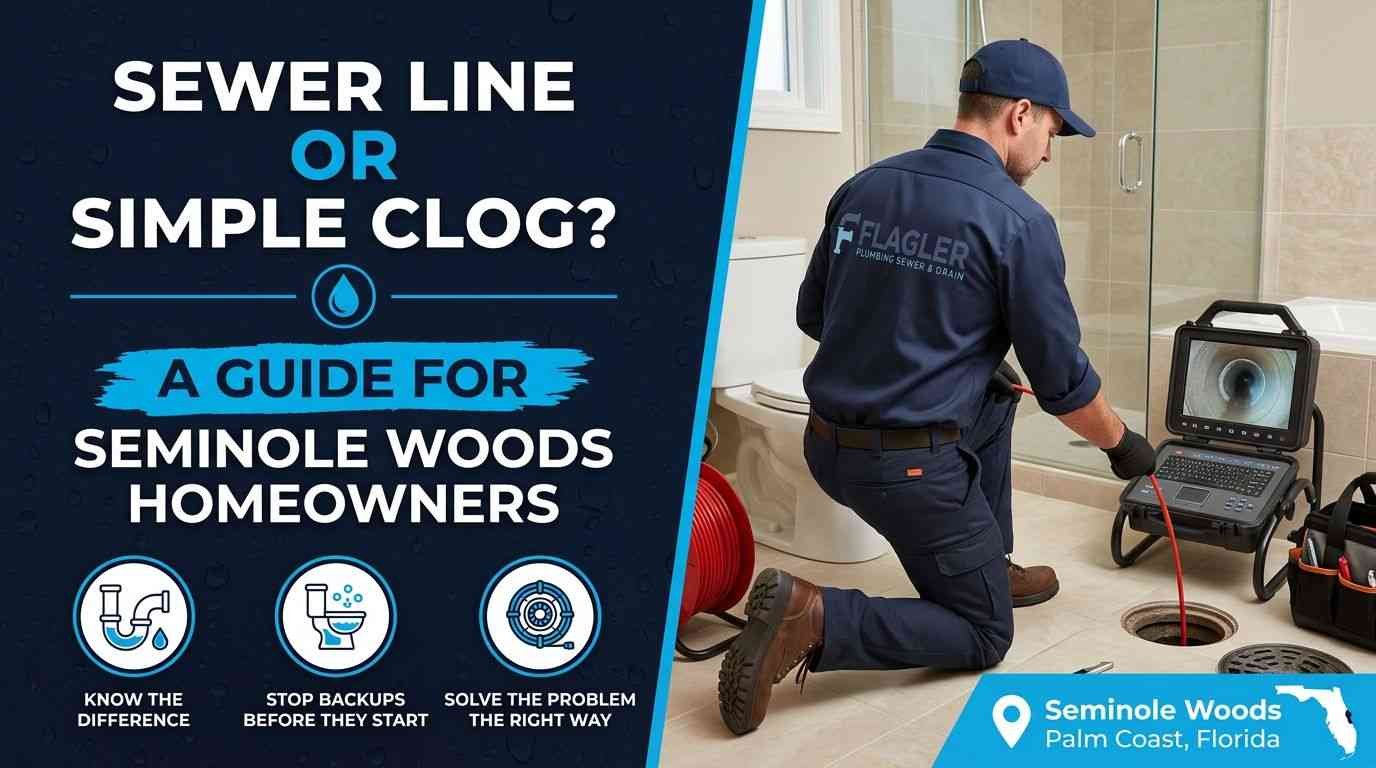
A slow drain is inconvenient.
A sewer line problem is something else entirely.
For homeowners in Seminole Woods, the challenge is knowing the difference before a minor clog turns into a messy, expensive backup. A kitchen sink that drains slowly may only need routine drain cleaning. But when toilets start bubbling, multiple drains slow down at once, or water backs up into a shower, the issue may be deeper in the plumbing system.
Understanding the warning signs can help homeowners take the right next step instead of guessing, plunging the same fixture for the fifth time, and hoping the plumbing suddenly develops a better attitude.
Why This Matters in Seminole Woods
Seminole Woods includes a mix of established homes and newer residential development in Palm Coast. That means plumbing conditions can vary from house to house.
Some homes may deal with isolated fixture clogs caused by everyday use. Others may experience deeper drain restrictions, root intrusion, damaged underground lines, poor previous repairs, or main sewer line problems that affect the entire home.
Not every clog is a sewer emergency.
But not every “little drain problem” is actually little, either.
What Is the Difference Between a Simple Clog and a Sewer Line Problem?
A simple clog usually affects one fixture or one nearby group of fixtures. It tends to be caused by a blockage close to the drain opening or inside a short section of branch piping.
A sewer line problem usually affects multiple fixtures or the home’s main drainage path. The blockage or damage is often deeper in the system, where wastewater from several fixtures merges before leaving the house.
A simple clog often means:
- One sink drains slowly
- One tub or shower backs up
- One toilet clogs repeatedly
- Nearby fixtures otherwise seem normal
- The problem stays limited to one area
A sewer line problem often means:
- More than one drain is slow
- Toilets gurgle or bubble
- Water backs up into a tub or shower
- Wastewater appears in lower fixtures
- Several bathrooms are affected
- The issue keeps returning after being cleared
- Sewage odors are present indoors or outside
The pattern matters more than the annoyance level.
One clogged bathroom sink is a nuisance. Water rising in the shower when the toilet flushes is your plumbing system filing a formal complaint.
Signs It Is Probably a Simple Clog
Not every slow drain means the main sewer line is failing.
A localized clog is more likely when the problem stays isolated to one fixture.
1. Only One Sink Is Draining Slowly
If one bathroom or kitchen sink drains poorly but everything else in the home works normally, the blockage is probably local.
Common causes include:
- Hair
- Soap residue
- Toothpaste buildup
- Food debris
- Grease
- Coffee grounds
- Small foreign objects
- Mineral buildup around the stopper or drain
A sink clog often begins close to the drain opening or trap.
In many cases, professional drain cleaning or removal of the localized blockage solves the issue.
2. One Shower or Tub Has Standing Water
When water pools in only one shower or tub, the most likely cause is a clog in that specific drain line.
Common causes include:
- Hair
- Soap scum
- Shampoo residue
- Small hygiene products
- Debris trapped in the drain
A single slow tub or shower does not automatically mean the main sewer line is involved.
However, if another fixture begins reacting when that tub drains, the problem may be farther downstream.
3. One Toilet Clogs but Other Fixtures Are Fine
Toilets can clog because of:
- Excess toilet paper
- Wipes
- Feminine hygiene products
- Toys
- Paper towels
- Small objects
- A weak flush pattern
- A partially blocked toilet trap
If one toilet clogs occasionally and the nearby sinks and showers still drain normally, the issue may be limited to that toilet or branch drain.
Repeated toilet clogs in the same bathroom may still deserve professional inspection, especially if plunging only solves the problem temporarily.
4. The Problem Improves Fully After Local Cleaning
A local clog often resolves completely once the blockage is removed.
If the sink, tub, or toilet returns to normal and no other fixtures are affected, the issue was probably isolated.
That said, if the exact same fixture keeps clogging every few weeks, the line may still have deeper buildup that was only partially cleared.
Temporary improvement is not the same thing as a true solution.
Signs It May Be a Sewer Line Problem
When the symptoms spread beyond one fixture, think bigger.
A sewer line problem often reveals itself through patterns that involve multiple parts of the house.
1. Multiple Drains Are Slow at the Same Time
If the kitchen sink, guest bathroom, and primary shower all seem sluggish, a simple local clog becomes much less likely.
This usually means the restriction is located deeper in the drainage system, where several branch lines connect.
Multiple slow drains suggest the home’s wastewater is struggling to move through a shared section of pipe.
2. Toilets Gurgle or Bubble
Toilets should flush. They should not sound like they are trying to start a conversation.
Gurgling or bubbling often means air is being displaced improperly inside the drain system. That can happen when a blockage deeper in the line disrupts normal drainage and venting.
Warning examples include:
- A toilet bubbles when the tub drains
- A toilet gurgles after using a sink
- Bubbles appear in the bowl without flushing
- A nearby toilet makes noise when the washing machine drains
This is one of the clearest signs that the problem may be beyond a single fixture.
3. Water Backs Up Into a Tub or Shower
When wastewater appears in a shower or tub after flushing a toilet or draining a sink, the issue may involve the main sewer line or a major shared branch drain.
This happens because lower fixtures often become the first place wastewater can reappear once the drainage system starts backing up.
You may notice:
- Water rising in the shower after flushing a toilet
- Dirty water appearing in a tub
- Water coming up from a basement or low-level drain, if applicable
- Repeated backups after plunging
A backup into a tub or shower is not something to monitor casually for a few weeks.
That is a sign the plumbing system needs proper diagnosis.
4. Sewage Odors Indoors or Outside
A persistent sewage smell may indicate:
- A drain blockage
- A dry trap
- A broken or leaking drain line
- A venting issue
- A sewer line problem
- Wastewater collecting where it should not be
If the odor is strong, recurring, or combined with slow drains and bubbling toilets, deeper sewer trouble becomes much more likely.
Odor alone does not prove the main line is damaged, but it should never be ignored.
5. The Lowest Drains Are the First to Back Up
In many homes, the lowest fixtures show signs first when the main sewer line is restricted.
That might include:
- A first-floor shower
- A lower bathroom tub
- A floor drain
- A laundry drain
When wastewater cannot exit normally, it often returns through the lowest available point.
That is why a shower backup can sometimes be the home’s first clear warning that the problem is much larger than one sink clog.
6. The Problem Keeps Coming Back
A clog that returns again and again often means:
- The line was only partially cleared
- There is heavy buildup farther down
- Roots are present
- The pipe is damaged
- The line has a belly or low spot
- The real issue was never fully identified
Repeated drain problems are one of the strongest reasons to move beyond guesswork and schedule a proper sewer camera inspection.
At some point, repeatedly plunging the same line is like hitting snooze on a smoke alarm. It does not solve the real problem.
Common Causes of Sewer Line Problems in Seminole Woods
A sewer line problem can develop for several reasons.
Tree Root Intrusion
Roots seek moisture. If an underground sewer line has a crack, loose joint, or weak connection, roots can enter and continue growing inside the pipe.
Once inside, they trap:
- Toilet paper
- Waste
- Grease
- Sludge
- Debris
This can create recurring restrictions and backups.
Pipe Damage or Deterioration
Older or damaged sewer lines may develop:
- Cracks
- Breaks
- Offset joints
- Collapsed sections
- Corrosion
- Separated connections
Even a small defect can interfere with proper drainage and catch debris over time.
Bellies or Sagging Pipe Sections
A sewer line should maintain proper slope.
If part of the line sags, wastewater and solids may collect in that low area instead of flowing out smoothly. This standing waste can lead to recurring clogs and chronic slow drainage.
Heavy Grease or Sludge Buildup
Not all sewer line problems involve roots or broken pipes.
Sometimes years of grease, soap, waste, and debris narrow the line until wastewater can no longer pass efficiently.
That buildup may eventually require more than basic snaking.
Flushing the Wrong Things
Common sewer troublemakers include:
- Wipes, even “flushable” ones
- Paper towels
- Feminine hygiene products
- Cat litter
- Cotton swabs
- Grease
- Food waste
- Excessive toilet paper
- Children’s toys or other objects
Your toilet is not a disappearance machine. It has standards.
When It Is Not the Main Sewer Line
Sometimes the problem is serious, but still not the main line.
A large branch drain serving one bathroom, laundry area, or one side of the house can also create symptoms that resemble a sewer problem.
For example:
- One bathroom may bubble and drain slowly
- A washing machine may back up into a nearby drain
- One group of fixtures may be affected while the rest of the house seems normal
That is why the exact pattern matters.
The issue may be more than a simple clog but not necessarily the full main sewer line from the house to the city connection.
How a Homeowner Can Do a Quick Basic Check
Before calling a plumber, you can gather useful clues.
Check how many fixtures are affected
Is it one sink, or several drains?
Flush a toilet and watch nearby fixtures
Does the shower react? Does another toilet gurgle?
Run water in one fixture and observe another
Does the tub bubble when the sink drains?
Notice where the problem happens first
Is the lowest fixture backing up?
Pay attention to odors
Is there a sewage smell near the bathroom, yard, or drains?
Think about the history
Has this happened before? Did it “get fixed” and then return?
These observations can help a plumber narrow down the likely cause more quickly.
What Not to Do
When you suspect a sewer line issue, a few things can make the situation worse.
Avoid:
- Repeatedly flushing a backed-up toilet
- Running large amounts of water
- Using multiple fixtures while drainage is failing
- Pouring harsh chemical drain cleaners into the line
- Assuming the smell will go away on its own
- Ignoring recurring symptoms because the backup temporarily disappeared
Chemical drain cleaners are especially risky in deeper blockages. They often sit in the pipe without solving the problem and can make professional service messier and less safe.
How Professional Diagnosis Works
When the signs suggest more than a simple clog, professional diagnosis may include the following.
Drain Cleaning or Snaking
A plumber may use a drain machine or auger to break through or remove a blockage.
This can be effective for:
- Local clogs
- Branch-line buildup
- Some toilet blockages
- Partial line obstructions
Sewer Camera Inspection
A sewer camera inspection helps identify the actual cause inside the line.
It can reveal:
- Roots
- Heavy buildup
- Cracks
- Offset joints
- Bellies
- Broken sections
- Foreign objects
- Recurring problem areas
A camera inspection is especially useful when the issue keeps returning or when you need to know whether the line has structural damage.
Hydro Jetting
For some lines, hydro jetting may be recommended to clear heavy grease, sludge, soap residue, or buildup along the inside pipe walls.
This is not the right solution for every situation, especially if the pipe is damaged, which is why inspection matters.
When to Call a Plumber Immediately
Call promptly when:
- Wastewater is backing up into the home
- Multiple drains are slow
- Toilets are bubbling
- You smell sewage
- The issue keeps returning
- Plunging only helps briefly
- More than one fixture is reacting
- You suspect the main line is restricted
- Water is backing up into the lowest drains
- The home cannot be used normally without causing overflow
A sewer line problem rarely rewards procrastination.
If the line is already warning you, waiting usually gives it time to make a bigger point.
How Seminole Woods Homeowners Can Help Prevent Sewer Trouble
Good habits can reduce the chance of future sewer and drain issues.
Helpful steps include:
- Do not flush wipes or hygiene products
- Avoid pouring grease down the sink
- Use drain strainers where appropriate
- Address slow drains early
- Schedule professional cleaning if issues recur
- Have recurring problems camera-inspected instead of repeatedly guessed at
- Be cautious about tree placement near underground lines
- Keep records of previous drain and sewer repairs
Prevention is much easier than dealing with a sewage backup on a Sunday afternoon.
The Bottom Line
A simple clog usually stays local.
A sewer line problem affects the system more broadly.
If one sink is slow, you may only be dealing with a routine blockage. If toilets bubble, multiple drains slow down, wastewater backs up into the shower, or the problem keeps coming back, the issue may be deeper in the line and more serious than it first appears.
The key is not to panic, but also not to underestimate the signs.
The earlier the real cause is identified, the better the chances of solving it before the situation becomes messier and more expensive.
Need Help in Seminole Woods?
Flagler Plumbing provides drain cleaning, sewer camera inspections, sewer line diagnostics, and plumbing repair services for homeowners throughout Seminole Woods and the surrounding Palm Coast area.
If you are dealing with recurring clogs, slow drains, bubbling toilets, or signs of a possible sewer backup, we can identify whether the issue is a simple clog or something deeper in the line.
Contact Flagler Plumbing to schedule drain cleaning or a sewer inspection for your Seminole Woods home.

